Owlet Dream Sock vs Nanit: What Each Tracks, and What the AAP Says About Wearable Monitors (2026)
Owlet Dream Sock vs Nanit: what each measures, FDA status, Wi-Fi and subscriptions, and the AAP's advice that neither kind of monitor reduces SIDS risk.
Independently chosen. As an Amazon Associate I earn from qualifying purchases: if you buy through our links, we may earn a commission at no cost to you. How we research
Quick answer
The Owlet Dream Sock measures pulse rate and oxygen saturation on the foot and has FDA De Novo authorization for over-the-counter use. Nanit is a video camera that tracks breathing motion through patterned Breathing Wear, and Nanit says it is not a medical device. The AAP says not to use either kind of monitor as a way to reduce SIDS risk.
At a glance
Our top picks
- 1Top pickOwlet Dream Sock Smart Baby Monitor$299.00 Amazon price as of Sep 28, 2026, 12:38 PM UTC (details)From the listing · not tested
For parents who want pulse and oxygen readings with FDA authorization behind them.
- 2Also considerOwlet Dream Duo 3 Smart Baby Monitor System$379.99 Amazon price as of Sep 28, 2026, 12:38 PM UTC (details)From the listing · not tested
The Owlet sock and camera together.
- 3Budget optionOwlet Dream Sight Smart Baby Monitor$99.99 Amazon price as of Sep 28, 2026, 12:38 PM UTC (details)From the listing · not tested
Owlet's camera without the sock, for video and room alerts.

Side by side
Quick comparison
| Owlet Dream Sock Smart Baby Monitor | Owlet Dream Duo 3 Smart Baby Monitor System | Owlet Dream Sight Smart Baby Monitor | Nanit Smart Baby Video Monitor, Camera & Floor Stand | Nanit Smart Baby Video Monitor System with Floor Stand & 8" Display | |
|---|---|---|---|---|---|
| Price | $299.00 Amazon price as of Sep 28, 2026, 12:38 PM UTC (details)Check price | $379.99 Amazon price as of Sep 28, 2026, 12:38 PM UTC (details)Check price | $99.99 Amazon price as of Sep 28, 2026, 12:38 PM UTC (details)Check price | $289.99 Amazon price as of Sep 28, 2026, 12:38 PM UTC (details)Check price | $399.99 Amazon price as of Sep 28, 2026, 12:38 PM UTC (details)Check price |
| Key Pros |
|
|
|
|
|
| Key Cons | -Needs 2.4 GHz Wi-Fi and a smartphone; 16-hour battery, per the listing | -The sock covers 1-18 months only; after that it is a camera system | -Camera only: no pulse, oxygen or breathing-motion tracking on its own | -Breathing Wear is a separate purchase unless bundled | -The listing says initial camera setup requires a subscription and internet access |
This comparison is for parents choosing between the Owlet Dream Sock and a Nanit camera. They do different jobs: the Owlet sock is a pulse oximeter on a baby's foot, authorized by the FDA, while Nanit is an overhead video camera that, with patterned Breathing Wear, watches for breathing motion and says it is not a medical device. Buy the Owlet if you want pulse and oxygen readings, the Nanit if you mainly want video and sleep tracking.
Neither reduces SIDS risk. The American Academy of Pediatrics (AAP) safe sleep guide says: "Don't use home cardiorespiratory monitors as a way to reduce the risk of SIDS." Both makers say their products are not intended to prevent it.
How we compared: FDA status is from the FDA's De Novo record for the Dream Sock and its decision summary, and Nanit's from Nanit's own statement. Features, Wi-Fi needs and subscriptions are from the makers' pages and the Amazon.com listings (all sold by Amazon.com, in stock in September 2026); we did not test either system.
The two side by side
| Owlet Dream Sock | Nanit (camera + Breathing Wear) | |
|---|---|---|
| Amazon price | Dream Sock $299.00 (Amazon, as of Sep 28, 2026, 12:38 PM UTC)Check price; Dream Duo 3 $379.99 (Amazon, as of Sep 28, 2026, 12:38 PM UTC)Check price | Camera & Floor Stand $289.99 (Amazon, as of Sep 28, 2026, 12:38 PM UTC)Check price; with 8" Display $399.99 (Amazon, as of Sep 28, 2026, 12:38 PM UTC)Check price |
| What it measures | Pulse rate and oxygen saturation (SpO2) | Video; breathing motion when the baby wears Breathing Wear |
| How | Pulse oximetry sensor in a fabric sock on the foot | Overhead camera reads the fabric pattern; "no electronics, wires, or sensors" on the baby, per Nanit |
| Age and size | Healthy infants 1-18 months, 6-30 lbs (FDA indication) | Breathing Wear from 0-24 months, per Nanit |
| FDA status | De Novo authorization granted November 8, 2023, over-the-counter | "Nanit is not a medical device," per Nanit |
| Alerts | When pulse rate or SpO2 leaves preset zones, on the Base Station and phone | When no breathing motion is detected, plus sound and motion alerts |
| Video | Only with the Dream Sight camera (sold alone, or in the Dream Duo) | Built in, 1080p |
| Wi-Fi | 2.4 GHz Wi-Fi and a smartphone required | Wi-Fi router required; local network viewing during internet outages (display system) |
| Subscription | Not required; Owlet360 is optional | Nanit Insights for sleep analytics; free trial included; display listing says setup requires a subscription |
| SIDS | "Does not detect, diagnose or reduce" SIDS (FDA summary) | "Not intended to diagnose, treat, or cure" any condition including SIDS, per Nanit |
Prices are Amazon's, as of the time shown, and subject to change. Details
What the Owlet Dream Sock measures
The Dream Sock uses pulse oximetry on the foot. FDA's decision summary says it "analyzes photoplethysmography data to identify instances when the infant's pulse rate (PR) and/or oxygen saturation (SpO2) moves outside a preset range, and provides a notification to the caregiver, prompting them to assess the infant."
FDA granted it De Novo authorization on November 8, 2023, as an "infant pulse rate and oxygen saturation monitor for over-the-counter use." The limits:
- It is for infants "1 to 18 months of age and between 6 to 30 lbs."
- It "is not intended for use with infants previously diagnosed with cardiovascular or respiratory disease or conditions."
- It "is not intended to provide notification for every episode" of abnormal readings.
- "The Dream Sock does not detect, diagnose or reduce Sudden Infant Death Syndrome (SIDS) or Sudden Unexpected Infant Death (SUID)."
The authorization followed an FDA warning letter in October 2021 that said Owlet was "marketing Owlet Smart Socks in the United States without marketing clearance or approval." FDA issued a close-out letter on June 5, 2024. The Dream Sock sold today is the authorized device.

Pro tip: FDA's summary says to "alternate between feet every 8 hours and also after recharging the Sensor," and to check the foot often for irritated skin.
How Nanit tracks breathing
Nanit is an overhead video camera first: 1080p video, sleep tracking, and sound and motion alerts, per its listing. Breathing tracking needs Breathing Wear, a band, swaddle or sleeping bag printed with a pattern that, in Nanit's words, "was custom-designed to enable the Nanit Smart Baby Monitor to accurately track your baby's breathing motion." The camera can "alert you if no breathing motion is detected," and the Breathing Band has "no electronics, wires, or sensors."
Nanit states what it is not:
"Nanit is not a medical device. Nanit is a connected product designed and intended to continuously learn from the data it collects to help you understand your baby's sleep patterns. It is not intended to diagnose, treat, or cure any disease or other condition, including but not limited to Sudden Infant Death Syndrome (SIDS). False positive or false negative readings about your baby's breathing patterns are a potential risk of Nanit."
It adds that Nanit "should not substitute for the care and oversight of an adult or consultation with medical professionals."
A Breathing Wear sleeping bag or swaddle is used like any other: the AAP's swaddling advice, including stopping when a baby shows signs of rolling, still applies. See our swaddle guide.
What the AAP says about wearable monitors
"Don't use home cardiorespiratory monitors as a way to reduce the risk of SIDS. You can buy consumer wellness devices such as heart rate and pulse oximetry monitors. Some of these are wearable. But remember that there is no evidence that these devices, which don't have to meet the same requirements as medical devices, decrease SIDS risk. Don't let these devices give you a false sense of security. It's fine to use one if you want to, just don't use it as a substitute for following all the above safe sleep guidelines."
Key point: a monitor changes none of the AAP's safe sleep basics: baby on their back, on a firm, flat surface, in a bare crib or bassinet, in your room without bed-sharing. Our safe sleep guide covers what belongs in the crib.
Wi-Fi, apps and subscriptions
- Owlet: the Dream Sock "connects via Bluetooth and 2.4 GHz Wi-Fi" and is "not currently compatible with 5 GHz," per its listing. Owlet says "no subscription is required" for core features; Owlet360 is an optional upgrade for morning reports and comparative sleep data.
- Nanit: the camera needs a Wi-Fi router. The display system's listing says "local network viewing ensures the monitor continues working during internet outages," and also that "initial camera setup requires a subscription and internet access." Sleep analytics, personalized tips and video look-back are in the Nanit Insights plans, which start with a free trial.

For video with no Wi-Fi, app or subscription, a local monitor with its own parent unit is the alternative; see our baby monitors without Wi-Fi.
Which to buy
- Pulse and oxygen readings from an FDA-authorized device: the Owlet Dream Sock.
- Sock plus camera in one app: the Owlet Dream Duo 3.
- An overhead camera with sleep tracking, plus breathing-motion tracking with Breathing Wear: the Nanit camera and floor stand.
- Nanit with a dedicated screen: the Nanit system with 8" display.
- Video only, no subscription questions: the Owlet Dream Sight or a local no-Wi-Fi monitor.
Buy either because you want the information, not as SIDS protection: the AAP says there is no evidence these devices decrease SIDS risk.
Frequently Asked Questions
Is the Owlet Dream Sock FDA approved?
It has FDA De Novo authorization, granted November 8, 2023, as an over-the-counter infant pulse rate and oxygen saturation monitor for healthy infants 1-18 months and 6-30 lbs. FDA's summary says it "does not detect, diagnose or reduce" SIDS.
Is Nanit a medical device?
No. Nanit says "Nanit is not a medical device," that it is not intended to diagnose, treat or cure any condition including SIDS, and that false positive or false negative breathing readings are a potential risk.
Do I need a subscription for Owlet or Nanit?
Not for the Owlet Dream Sock's core features, per Owlet; Owlet360 is optional. Nanit's sleep analytics and video history are in Nanit Insights, which starts with a free trial, and its display listing says initial setup requires a subscription and internet access.
Can I use the Owlet Dream Sock on a newborn?
Not before 1 month and 6 lbs, where FDA's indication starts.
Proof
Sources
Everything this guide relies on, as linked in the text. Last checked September 28, 2026.
- American Academy of Pediatrics: A parents guide to safe sleep
- U.S. Food and Drug Administration: FDA's De Novo record for the Dream Sock
- U.S. Food and Drug Administration: Decision summary
- nanit.com: Nanit's own statement
- U.S. Food and Drug Administration: Warning letter in October 2021
- U.S. Food and Drug Administration: Close-out letter
NurseryProof is a participant in the Amazon Services LLC Associates Program, an affiliate advertising program designed to provide a means for sites to earn advertising fees by advertising and linking to Amazon.com. This guide summarizes public guidance and is not medical advice; talk with your pediatrician about monitoring, especially if your baby has a health condition.
The picks
Products reviewed
Ranked in the order we recommend them. Prices shown are approximate and change often; the buttons always show the current Amazon price.
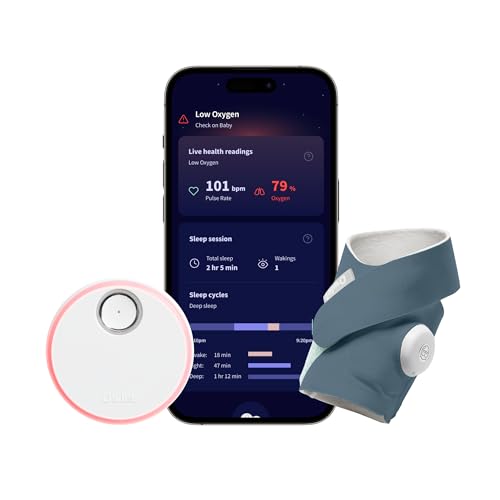
Owlet Dream Sock Smart Baby Monitor
From the listing · not testedFor parents who want pulse and oxygen readings with FDA authorization behind them.
Pros
- + Tracks pulse rate and oxygen levels and alerts on the Base Station and phone when readings leave preset zones, per the listing
- + FDA De Novo authorization for over-the-counter use in healthy infants 1-18 months, 6-30 lbs
- + No subscription required for core features, per Owlet; Owlet360 is an optional upgrade
Cons
- - Needs 2.4 GHz Wi-Fi and a smartphone; 16-hour battery, per the listing
- - Not for babies with diagnosed heart or breathing conditions, per FDA's authorization

Owlet Dream Duo 3 Smart Baby Monitor System
From the listing · not testedThe Owlet sock and camera together.
Pros
- + Dream Sock plus the Dream Sight 2K HD camera in one app, per the listing
- + 130-degree lens, 4x zoom, room temperature and humidity tracking
- + Camera supports 2.4 and 5 GHz Wi-Fi; the sock needs 2.4 GHz
Cons
- - The sock covers 1-18 months only; after that it is a camera system
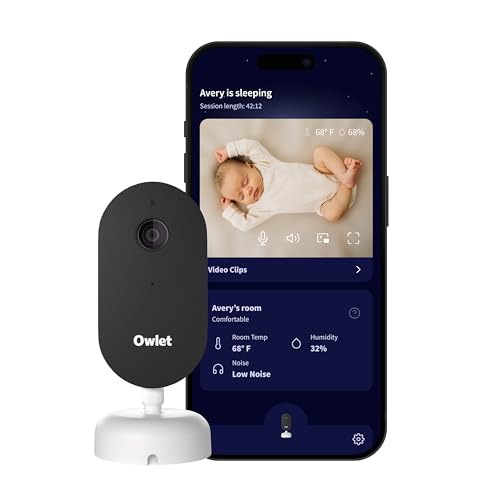
Owlet Dream Sight Smart Baby Monitor
From the listing · not testedOwlet's camera without the sock, for video and room alerts.
Pros
- + 2K HD Wi-Fi camera with night vision, two-way talk and cry, sound and motion alerts, per the listing
- + Room temperature and humidity alerts
- + Pairs with a Dream Sock later, or works on its own
Cons
- - Camera only: no pulse, oxygen or breathing-motion tracking on its own

Nanit Smart Baby Video Monitor, Camera & Floor Stand
From the listing · not testedFor parents who want an overhead camera and sleep data, with optional breathing-motion tracking.
Pros
- + 1080p overhead camera with sleep tracking, sound and motion alerts, two-way audio and night vision, per the listing
- + Room temperature and humidity tracking; multi-caregiver access
- + Tracks breathing motion when paired with Nanit Breathing Wear, per Nanit
Cons
- - Breathing Wear is a separate purchase unless bundled
- - Sleep analytics and video history sit in the Nanit Insights subscription, which starts as a free trial

Nanit Smart Baby Video Monitor System with Floor Stand & 8" Display
From the listing · not testedThe Nanit for households that want a dedicated screen as well as the app.
Pros
- + Adds an 8-inch touchscreen display with a 3-6 hour battery, per the listing
- + Local network viewing keeps the monitor working during internet outages, per the listing
- + Same camera, sleep tracking and room sensors as the camera-only Nanit
Cons
- - The listing says initial camera setup requires a subscription and internet access
Still comparing? Search Amazon
Today's Deals →Quick searches, tagged so you support the site at no extra cost.
Amazon prices and availability change often; cards with a live Amazon price show when it was last checked. As an Amazon Associate I earn from qualifying purchases.


