Best Balance Bikes and Toddler Helmets (2026)
Five balance bikes for ages 1 to 5 and three helmets whose listings state CPSC compliance, plus how to read a helmet label and fit it using CPSC guidance.
Independently chosen. As an Amazon Associate I earn from qualifying purchases: if you buy through our links, we may earn a commission at no cost to you. How we research
Quick answer
For most toddlers, the Retrospec Cub 2 ($69.99) is a simple first balance bike with flat-free tires; the woom GO 1 ($249) adds a hand brake and weighs 6.4 lbs. Pair it with a helmet labeled for ages 1 and older under the CPSC standard, like the Bell Pint ($31.56).
At a glance
Our top picks
- 1
A simple, low-maintenance first balance bike; chosen from the listing, not tested.
- 2
The light, brake-equipped pick for parents who want to teach braking early; chosen from the listing, not tested.
- 3
A hand brake and air tires for about half the woom's price; chosen from the listing, not tested.

Side by side
Quick comparison
| Retrospec Cub 2 Balance Bike | woom GO 1 Balance Bike | Retrospec Cub Plus Balance Bike | Radio Flyer Air Ride Balance Bike | Radio Flyer Steady Start 3-Wheel Balance Bike | Bell Pint Toddler Bike Helmet | Bell Spidey Eyes Toddler Helmet | Giro Scamp II Youth Bike Helmet (Size S) | |
|---|---|---|---|---|---|---|---|---|
| Price | $69.99on Amazon | $249.00on Amazon | $119.99on Amazon | $79.99on Amazon | $49.99on Amazon | $31.56on Amazon | $21.59on Amazon | $48.00on Amazon |
| Key Pros |
|
|
|
|
|
|
|
|
| Key Cons | -No hand brake; the listing gives no weight | -The priciest bike here by a wide margin | -9 lbs, the heaviest two-wheeler here | -Steel frame, 7.94 lbs; no hand brake | -Three wheels, so it teaches walking and scooting more than balancing | -Also meets a multi-impact skateboard standard, but still replace it after any crash | -Character graphics only; check the size before buying for a younger child | -Size S is certified for age 5 and older; for a younger child, look for the age 1 and older label |
A balance bike has no pedals: a toddler sits, pushes with their feet and learns to balance before learning to pedal. This guide compares five balance bikes for ages 1 to 5, and three helmets whose Amazon listings state compliance with the federal bicycle helmet standard. Helmet guidance comes from the U.S. Consumer Product Safety Commission.
How we chose:
- Every pick is sold by Amazon.com or the brand's own store and was in stock when we checked in September 2026.
- We included only helmets whose listing states CPSC compliance. Several popular kids' helmets were left out because their listings do not say it.
- Specs are quoted from each listing, and prices are list prices. We did not test these bikes or helmets.
How Do These Balance Bikes Compare?
| Bike | Listed ages | Wheels / tires | Weight (listing) | Hand brake | Sold by | List price |
|---|---|---|---|---|---|---|
| Radio Flyer Steady Start | 1 to 3 | 3 wide treaded wheels | 7 lbs | No | Amazon.com | $49.99 |
| Retrospec Cub 2 | 18 mo to 3 yrs | 12 in, airless | Not listed | No | Amazon.com | $69.99 |
| Radio Flyer Air Ride | 1.5 to 5 | 12 in, air | 7.94 lbs | No | Amazon.com | $79.99 |
| Retrospec Cub Plus | 18 mo to 4 yrs | 12 in, air | 9 lbs | V-brake | Amazon.com | $119.99 |
| woom GO 1 | 18 mo to 3.5 yrs | 12 in | 6.4 lbs | Rear hand brake | woom store | $249.00 |
Key point: weight is the biggest spec difference here, from 6.4 lbs for the woom to 9 lbs for the Retrospec Cub Plus, and a toddler has to steer and push the bike on their own.
Which Balance Bike Should You Buy?
- For a young toddler not ready for two wheels: the Radio Flyer Steady Start ($49.99) has three wheels and stands on its own. It is listed for ages 1 to 3 and works indoors on hardwood and carpet.
- For a simple first two-wheeler: the Retrospec Cub 2 ($69.99) has airless tires that cannot go flat and a seat that adjusts from 11 to 14.5 inches.
- For the longest use: the Radio Flyer Air Ride ($79.99) is listed for ages 1.5 to 5, with air tires and a footrest for gliding.
- For learning to brake: the Retrospec Cub Plus ($119.99) adds a V-brake with child-sized levers, and the woom GO 1 ($249) adds a rear hand brake and a steering limiter at 6.4 lbs.
Pro tip: measure your child's inseam before you buy. woom sizes the GO 1 by inseam (10 to 14.4 inches) and height (31 to 40 inches), and Retrospec lists the Cub 2's seat height as 11 to 14.5 inches, so you can compare the numbers directly.

What Does the CPSC Helmet Standard Mean for a Toddler?
All bicycle helmets sold in the U.S. must meet a mandatory federal standard. The CPSC's helmet guide says "all bicycle helmets manufactured after 1999 must meet" the CPSC bicycle helmet standard, 16 CFR part 1203.
The regulation text has two label statements. A helmet must say either that it complies with the CPSC standard "for Persons Age 5 and Older" or "for Persons Age 1 and Older (Extended Head Coverage)". The rule tests the two kinds against different impact lines, one for helmets intended only for ages 5 and up and one for helmets intended for age 1 and older.
| Helmet | Label stated on listing | Listed fit | Sold by | List price |
|---|---|---|---|---|
| Bell Spidey Eyes | Age 1 and Older (Extended Head Coverage) | 48 to 52 cm; ages 3 to 5 | Amazon.com | $21.59 |
| Bell Pint | Age 1 and Older (Extended Head Coverage) | 48 to 52 cm; ages 3 to 5 | Amazon.com | $31.56 |
| Giro Scamp II, size S | Age 5 and Older | 49 to 53 cm | Amazon.com | $64.95 |
Key point: the CPSC says a compliant helmet carries a label or marking, usually on the liner inside, on the outer shell, or on the chin strap. It warns: don't rely only on the helmet's name, look or packaging claims.
That is why we did not use listing titles to pick helmets. Some well-known kids' helmets are marketed as safe but their listings do not state the CPSC compliance statement, so we left them out.
How Should a Toddler Helmet Fit?
The CPSC's fit test is short:
- Comfortable and snug. A helmet should be both.
- Level. Worn level on the head, "not tilted back on the top of your head or pulled too low over your forehead."
- Stays put. Once on, "the helmet should not move in any direction, back-to-front or side-to-side."
- Chin strap fastened. The strap should be secure so the helmet doesn't move or fall off in a fall.
The CPSC also says: "If you buy a helmet for a child, bring the child with you so that the helmet can be tested for a good fit." When buying online, measure your child's head circumference first and compare it to the listed range. Both Bell listings warn that head sizes vary within an age range.
Pro tip: don't add padding, stickers or covers. The CPSC says not to add extra padding or parts the maker's instructions don't specify, and that stickers and attachments not provided with the helmet can affect how it performs.

When Should a Toddler Not Wear a Helmet?
The CPSC is specific: children should not wear a bike helmet on playgrounds or when climbing trees. The chin strap can catch on equipment or branches and pose a strangulation risk, and the helmet can trap a child's head in an opening the body fits through.
So the helmet goes on for the bike and comes off before the slide.
When Should You Replace a Helmet?
- After a crash. The CPSC says bike helmets are made to protect against a single fall. The foam crushes to absorb the impact and will not protect again. "Even if there are no visible signs of damage to the helmet, you must replace it."
- When it no longer fits. Toddlers grow; recheck the fit each season.
- With age. Follow the maker's guidance. Without it, the CPSC says it may be prudent to replace a helmet within 5 to 10 years.
Key point: check recalls before buying used. CPSC recall records include Retrospec's Scout kids' helmets (2024) and several Bell children's helmets, the Axle, Cadence, Rev and Frenzy (2025), all for failing the federal helmet standard. None of the helmets in this guide are among them. woom recalled its 2018 to 2021 ORIGINAL bikes, including the woom 1 balance bike, in 2023 because the stem and handlebar can detach; the GO 1 here is a different model. Our recalls page lists recent children's product recalls.
Bottom line: pick a balance bike that matches your child's inseam and is light enough for them to handle, and pair it with a helmet whose label says it meets the CPSC standard. For a toddler, look for "Age 1 and Older (Extended Head Coverage)", fit it snug and level with the strap fastened, and replace it after any crash.
This guide summarizes CPSC guidance and federal regulations. It is not medical advice; ask your pediatrician if you have questions about your child's development or safety.
Frequently Asked Questions
What age is a balance bike for?
The balance bikes here are listed from 18 months up, and the Radio Flyer Steady Start three-wheeler from age 1. The Radio Flyer Air Ride has the widest range, 1.5 to 5. Compare your child's inseam with the listed seat height or inseam range.
Does my toddler need a helmet on a balance bike?
Yes. A balance bike is a bike. Choose a helmet that states compliance with the CPSC bicycle helmet standard, 16 CFR part 1203, and for a toddler look for the "Age 1 and Older (Extended Head Coverage)" statement.
How do I know a helmet meets the CPSC standard?
Look for the compliance label, usually inside on the liner, on the outer shell or on the chin strap. The CPSC warns against relying on a helmet's name, appearance or packaging claims alone.
What's the difference between the age 1 and age 5 helmet labels?
Both are CPSC bicycle helmet certifications. The federal rule tests helmets intended for age 1 and older, labeled Extended Head Coverage, against a different impact line than helmets intended only for ages 5 and older.
Do I need to replace a helmet after a fall?
Yes, after any crash where the helmet hits the ground. The CPSC says bike helmet foam crushes to absorb one impact and must be replaced even if you see no damage.
Is a hand brake worth it on a balance bike?
It is optional; on a bike without one, a child stops with their feet. The woom GO 1 and Retrospec Cub Plus add hand brakes so children can learn braking before a pedal bike.
Proof
Sources
Everything this guide relies on, as linked in the text. Last checked September 28, 2026.
- U.S. Consumer Product Safety Commission: Helmet guide
NurseryProof is a participant in the Amazon Services LLC Associates Program, an affiliate advertising program designed to provide a means for sites to earn advertising fees by advertising and linking to Amazon.com.
The picks
Products reviewed
Ranked in the order we recommend them. Prices shown are approximate and change often; the buttons always show the current Amazon price.

Retrospec Cub 2 Balance Bike
A simple, low-maintenance first balance bike; chosen from the listing, not tested.
Pros
- + Listed for 18 months to 3 years; 12 in wheels
- + Airless, puncture-proof tires
- + Seat adjusts from 11 to 14.5 in; quick-release handlebars
Cons
- - No hand brake; the listing gives no weight

woom GO 1 Balance Bike
The light, brake-equipped pick for parents who want to teach braking early; chosen from the listing, not tested.
Pros
- + 6.4 lbs, the lightest bike here
- + Child-sized rear hand brake and a steering limiter
- + Sized by inseam (10 to 14.4 in) and height (31 to 40 in); listed for 18 months to 3.5 years
Cons
- - The priciest bike here by a wide margin

Retrospec Cub Plus Balance Bike
A hand brake and air tires for about half the woom's price; chosen from the listing, not tested.
Pros
- + Adjustable V-brake with child-sized levers
- + Air-filled tires for grass and gravel
- + Listed for 18 months to 4 years; adjustable seat and handlebars
Cons
- - 9 lbs, the heaviest two-wheeler here

Radio Flyer Air Ride Balance Bike
The bike that fits the longest age range; chosen from the listing, not tested.
Pros
- + Listed for ages 1.5 to 5, the widest range here
- + 12 in rubber air tires; tool-free seat adjustment
- + Grip-tape footrest on the frame for gliding
Cons
- - Steel frame, 7.94 lbs; no hand brake

Radio Flyer Steady Start 3-Wheel Balance Bike
A starter ride for a young toddler not ready for two wheels; chosen from the listing, not tested.
Pros
- + Listed for ages 1 to 3; stands on its own with three wheels
- + Wide treaded wheels for hardwood, carpet and pavement
- + Tool-free adjustable padded seat
Cons
- - Three wheels, so it teaches walking and scooting more than balancing
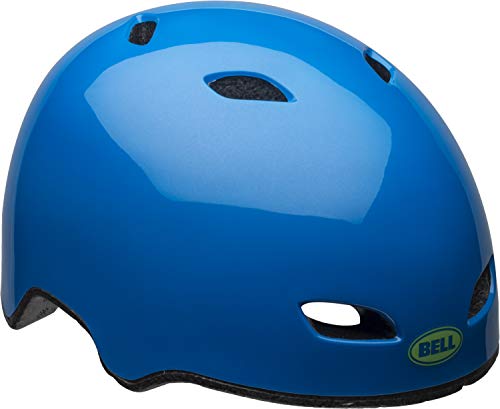
Bell Pint Toddler Bike Helmet
A toddler-certified helmet at a modest price; chosen from the listing, not tested.
Pros
- + Listing states compliance with the CPSC standard for persons age 1 and older (Extended Head Coverage)
- + Fits most heads 48 to 52 cm; recommended for ages 3 to 5
- + Side buckle designed to avoid pinching
Cons
- - Also meets a multi-impact skateboard standard, but still replace it after any crash
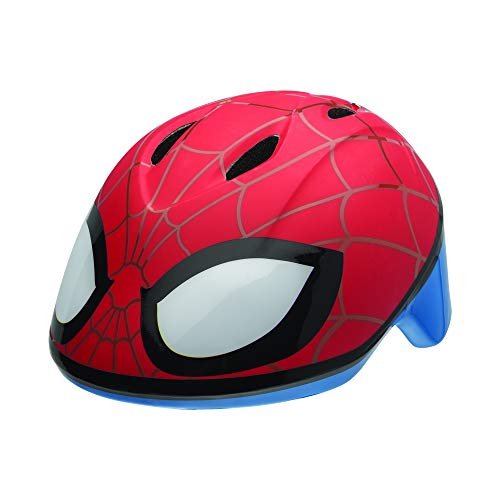
Bell Spidey Eyes Toddler Helmet
The lowest-priced CPSC-labeled toddler helmet we found from Amazon.com; chosen from the listing, not tested.
Pros
- + Listing states compliance with the CPSC standard for persons age 1 and older (Extended Head Coverage)
- + Fits 48 to 52 cm heads; recommended for ages 3 to 5
- + Reflectors, extended rear coverage and a pinch-guard buckle
Cons
- - Character graphics only; check the size before buying for a younger child

Giro Scamp II Youth Bike Helmet (Size S)
A step-up helmet for a child turning 5; chosen from the listing, not tested.
Pros
- + Size S fits 49 to 53 cm and states compliance with the CPSC standard for persons age 5 and older
- + Hard shell with a polycarbonate lower wrap
- + Roc Loc Jr. dial fit with a large knob for adults to adjust
Cons
- - Size S is certified for age 5 and older; for a younger child, look for the age 1 and older label
Still comparing? Search Amazon
Today's Deals →Quick searches, tagged so you support the site at no extra cost.
Amazon prices and availability change often; cards with a live Amazon price show when it was last checked. As an Amazon Associate I earn from qualifying purchases.


