Best Sippy Cups and Straw Cups (2026): Valves, Spouts, Straws, and Open Cups Compared
Nine sippy, straw, 360 and open training cups compared on valves, listed age and handles, with the AAP's advice on when to offer a cup and move off the bottle.
Independently chosen. As an Amazon Associate I earn from qualifying purchases: if you buy through our links, we may earn a commission at no cost to you. How we research
Quick answer
The AAP says to offer a cup around 6 months, when solids start, and suggests a sippy cup with no valve if you use one. Good first cups: the open ezpz Tiny Cup ($11.49), and the Dr. Brown's First Straw Cup ($12.99) or Munchkin Any Angle ($8.42) for straws. Aim to finish bottle weaning between 12 and 18 months.
At a glance
Our top picks
- 1
The simplest way to practice the open cup the AAP wants kids using by about 2; chosen from the listing, not tested.
- 2Also considerDr. Brown's Milestones Baby's First Straw Cup (2-Pack)$9.69 on Amazon · checked Sep 27, 2026
A first straw cup built for tipping and sipping at 6 months; chosen from the listing, not tested.
- 3Budget optionMunchkin Any Angle Weighted Straw Cup with Handles, 7 oz$8.42 on Amazon · checked Sep 27, 2026
The lowest-cost weighted straw cup here; chosen from the listing, not tested.

Side by side
Quick comparison
| ezpz Tiny Cup (Silicone Open Training Cup) | Dr. Brown's Milestones Baby's First Straw Cup (2-Pack) | Munchkin Any Angle Weighted Straw Cup with Handles, 7 oz | b.box Sippy Cup with Weighted Straw, 8 oz | OXO Tot Transitions Straw Cup with Removable Handles, 6 oz | Munchkin Miracle 360 Sippy Cup with Handles, 7 oz (2-Pack) | Philips Avent My Easy Sippy Cup, Soft Spout, 9 oz (2-Pack) | NUK Learner Cup, Soft Spout, 10 oz (2-Pack) | Nuby Clik-It Grip N' Sip Soft Spout Cup, 10 oz (3-Pack) | |
|---|---|---|---|---|---|---|---|---|---|
| Price | $11.49on Amazon | $9.69on Amazon | $8.42on Amazon | $9.99on Amazon | $12.99on Amazon | $11.82on Amazon | $6.96on Amazon | $12.44on Amazon | $7.99on Amazon |
| Key Pros |
|
|
|
|
|
|
|
|
|
| Key Cons | -Open cup, so it spills; listed from 4 months, earlier than the AAP's around-6-months cup start | -Straw needs its included wire brush to clean inside | -A single cup at this price, not a pair | -Uses a two-way valve, which the AAP's no-valve advice for sippy cups argues against | -Valved straw; the listing gives few other details, including no age range | -The seal means kids press and sip rather than pour, unlike a true open cup | -One-piece built-in valve, the kind the AAP suggests avoiding in a sippy cup | -Listing gives two ages: 6+ months in the title, 9 months+ in the details | -Valved (Touch-Flo) spout; listed from 4 months, earlier than the AAP's around 6 months |
The move from bottle to cup is one of the few feeding milestones with a clear timeline. The American Academy of Pediatrics' page on moving from the bottle to a cup says the transition "will begin around 6 months, when you offer your child a cup for the first time," and that you then reduce bottle feedings slowly, "completing the transition sometime between 12 and 18 months."
The cup you choose matters less than using it. Still, cups differ in one way the AAP cares about: whether they have a valve.
How we chose:
- We did not test these cups. Each is described from its listing and the brand's own claims, which we label as theirs.
- Each is sold by Amazon.com or the brand's own store and was in stock when we checked in September 2026.
- Guidance comes from the AAP's HealthyChildren.org page on discontinuing the bottle and its guide to starting solid foods.
- Prices are list prices; sale prices vary.
How Do the Cups Compare?
| Cup | Style | Valve or seal | Handles | Listed age | Sold by | List price |
|---|---|---|---|---|---|---|
| ezpz Tiny Cup | Open cup, 1 | None | No (grip) | 4 months+ | ezpz | $11.49 |
| Dr. Brown's First Straw Cup | Weighted straw, 2-pack | Not stated; spill-proof lid | Removable | 6 months+ | Amazon.com | $12.99 |
| Munchkin Any Angle 7 oz | Weighted straw, 1 | Click Lock seal | Removable | 6 months+ | Amazon.com | $8.42 |
| b.box Weighted Straw | Weighted straw, 1 | Two-way valve | Yes | 6 months+ | b.box | $9.99 |
| OXO Tot Transitions 6 oz | Straw, 1 | Straw valve | Removable | Not stated | Amazon.com | $12.99 |
| Munchkin Miracle 360 | 360 rim, 2-pack | Rim seal, no valve | Yes | 6 months+ | Amazon.com | $14.78 |
| Philips Avent My Easy Sippy | Soft spout, 2-pack | Built-in valve | No | Not stated | Amazon.com | $9.99 |
| NUK Learner Cup | Soft spout, 2-pack | Spill-proof spout, air vent | Removable | 6 or 9 months+ (listing conflicts) | Amazon.com | $13.99 |
| Nuby Clik-It Grip N' Sip | Soft spout, 3-pack | Touch-Flo valve | Yes | 4 months+ | Amazon.com | $7.99 |
When Should a Baby Start Using a Cup?
The AAP says to "offer your child a cup when they start eating solid foods, usually around 6 months." It gives parents a choice of cup: "You can use a 'sippy' (training) cup with a spouted lid or offer a cup and straw. Some children may choose to drink from an open cup without a straw – and that's just fine, too."
Two listings here (ezpz and Nuby) say 4 months and up. The AAP ties the first cup to starting solids instead, and our guide to first-foods gear covers the CDC's readiness signs for that.
What goes in the cup changes over time. The AAP suggests starting with whatever your baby already drinks: "Begin by putting formula or breast milk in their cup." As they get the hang of it, add plain water at mealtimes.
Key point: the AAP says it's healthiest for kids to drink from an open cup by about 2 years of age. Sippy cups "should be used only while little ones are learning."

Do Sippy Cup Valves Matter?
This is where the AAP is most specific. It says many sippy cups have a valve under the spout to stop spills, "But kids have to suck to get any liquid from them, which is just like drinking from a baby bottle." Its advice: "If you prefer a sippy cup rather than an open cup (with or without straw), choose one with no valve."
Here's how the picks line up, based on what each listing says:
- No valve: the ezpz Tiny Cup is an open cup with no lid at all. The Munchkin Miracle 360 has no valve either, according to Munchkin; its rim seals when your child stops drinking.
- A valve, per the listing: Philips Avent My Easy Sippy (built-in valve), Nuby Clik-It (Touch-Flo valve), b.box (two-way valve) and OXO Tot Transitions (straw valve).
- Spill-proof, valve not described: Dr. Brown's First Straw Cup, Munchkin Any Angle and NUK Learner Cup. Their listings call them spill-proof without saying how.
Pro tip: a valved cup can still earn a place in the diaper bag, where spills are the bigger problem. Just use an open cup or a no-valve cup at meals, which is when the AAP says to offer cups.
Straw Cup, Sippy Cup, or Open Cup?
- Open cup (ezpz Tiny Cup): the skill the AAP wants by age 2. It spills, so start with an ounce or two at the high chair.
- Weighted straw cup (Dr. Brown's, Munchkin Any Angle, b.box): the weight keeps the straw in the liquid, so a baby can drink with the cup tipped. The AAP lists "a cup and straw" as an option alongside sippy cups.
- 360 cup (Munchkin Miracle 360): drinks from the rim like a regular cup, without the spills.
- Soft-spout sippy (Philips Avent, NUK, Nuby): familiar and cheap, but these are the most bottle-like of the picks.
The AAP also suggests handles: "Opt for one with two handles to help little hands get a grip." Every pick here except the Philips Avent and the ezpz has handles, and several come off as your child's grip improves.
Best for: a first cup at 6 months, the ezpz Tiny Cup for open-cup practice plus the Dr. Brown's First Straw Cup for straw drinking. Out of the house, the Munchkin Miracle 360.

What Should Go in the Cup?
The AAP says plain water is the healthiest drink, and that the fluoride in tap water helps prevent tooth decay. On sippy cups specifically, it says to fill them only with "plain fluoridated water without juice or sugar."
Some listings mention juice, but the AAP's solid foods guide says "Babies younger than 12 months should not be given juice." After 12 months, it limits juice to 100% fruit juice, no more than 4 ounces a day, and only in a cup.
The AAP also advises offering cups mainly at mealtime rather than letting a toddler carry one around all day.
How to Move From Bottle to Cup
The AAP's steps, briefly:
- Offer a cup at meals from about 6 months, starting with breast milk or formula.
- Tell your child they can drink from a bottle at mealtimes, and gradually drop bottle feedings at other times, "especially naps or bedtime."
- Aim to finish between 12 and 18 months.
- Ask other caregivers to follow the same routine.
The AAP explains why the timing matters: children who drink from bottles well into their second year may skip meals, and they risk cavities when their teeth are "constantly bathed in milk, formula, juice or other drinks." If resistance turns into a power struggle, talk with your pediatrician.
Bottom line: buy one open cup and one straw cup at around 6 months, and skip the valve if you can. Our guide to easy-to-clean high chairs covers the seat where cup practice happens. Still using bottles? See our picks of bottles for breastfed babies. Before using a secondhand cup or bottle, check it in our recall checker.
Frequently Asked Questions
What age should a baby start using a sippy cup?
The AAP recommends offering a cup when your child starts eating solid foods, usually around 6 months. That can be a sippy cup, a straw cup or an open cup. The AAP says to finish the move off the bottle sometime between 12 and 18 months.
Are straw cups better than sippy cups?
The AAP doesn't rank straw cups over sippy cups; it lists a sippy cup with a spouted lid, a cup and straw, or an open cup as options. What it does say is that if you use a sippy cup, choose one with no valve, and that kids should drink from an open cup by about 2 years.
Why does the AAP say to avoid valves in sippy cups?
Valves stop spills, but the AAP says kids "have to suck to get any liquid from them, which is just like drinking from a baby bottle." A cup without a valve gives more practice at real cup drinking.
Is the Munchkin Miracle 360 a good first cup?
Munchkin lists it for babies 6 months and up and says it seals when your child stops drinking, with no extra valves. That makes it spill-proof without a spout. The AAP's page doesn't address 360-style cups, so pair it with some open-cup practice at meals.
What should I put in my baby's cup?
Start with breast milk or formula, the AAP says, then add plain water at mealtimes. The AAP says babies younger than 12 months should not be given juice, and sippy cups should hold only plain fluoridated water without juice or sugar.
Proof
Sources
Everything this guide relies on, as linked in the text. Last checked September 28, 2026.
- American Academy of Pediatrics: AAP's HealthyChildren.org page on discontinuing the bottle
- American Academy of Pediatrics: Starting Solid Foods
NurseryProof is a participant in the Amazon Services LLC Associates Program, an affiliate advertising program designed to provide a means for sites to earn advertising fees by advertising and linking to Amazon.com. This guide summarizes public guidance and is not medical advice; ask your pediatrician about your child's move from bottle to cup, especially if your child has a medical condition or feeding delay.
The picks
Products reviewed
Ranked in the order we recommend them. Prices shown are approximate and change often; the buttons always show the current Amazon price.
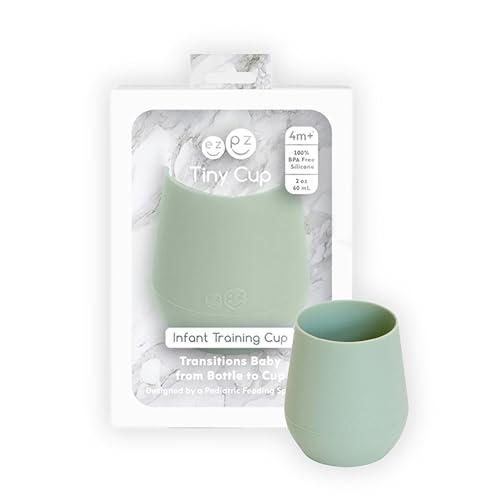
ezpz Tiny Cup (Silicone Open Training Cup)
The simplest way to practice the open cup the AAP wants kids using by about 2; chosen from the listing, not tested.
Pros
- + Small open cup sized for a baby's mouth and hands, per ezpz
- + Weighted base and non-slip grip to resist tipping
- + Food-grade silicone, dishwasher safe; sold by the ezpz store
Cons
- - Open cup, so it spills; listed from 4 months, earlier than the AAP's around-6-months cup start

Dr. Brown's Milestones Baby's First Straw Cup (2-Pack)
A first straw cup built for tipping and sipping at 6 months; chosen from the listing, not tested.
Pros
- + Weighted silicone straw moves with the liquid so baby can sip at any tilt
- + Removable side handles and measuring marks
- + Sliding lid stores the straw; dishwasher (top rack) and sterilizer safe; 6 months+; sold by Amazon.com
Cons
- - Straw needs its included wire brush to clean inside

Munchkin Any Angle Weighted Straw Cup with Handles, 7 oz
The lowest-cost weighted straw cup here; chosen from the listing, not tested.
Pros
- + Weighted straw lets toddlers drink even when the cup is tilted
- + Removable trainer handles, listed for 6 months and up
- + Click Lock lid seals for spill-proofing; straw brush included; sold by Amazon.com
Cons
- - A single cup at this price, not a pair

b.box Sippy Cup with Weighted Straw, 8 oz
A leak-resistant weighted straw cup for bags and car rides; chosen from the listing, not tested.
Pros
- + Weighted straw stays in the liquid at any angle, per b.box
- + Easy-grip handles and volume markings; for 6 months to toddler
- + Flip-top lid covers the straw; dishwasher and sterilizer safe; sold by the b.box store
Cons
- - Uses a two-way valve, which the AAP's no-valve advice for sippy cups argues against

OXO Tot Transitions Straw Cup with Removable Handles, 6 oz
A small straw cup with removable handles from a well-known feeding brand; chosen from the listing, not tested.
Pros
- + 6 oz size with handles that come off as your child grows
- + Straw valve opens when your child's mouth presses on the spout, per OXO
- + Sold by Amazon.com
Cons
- - Valved straw; the listing gives few other details, including no age range

Munchkin Miracle 360 Sippy Cup with Handles, 7 oz (2-Pack)
A spill-proof cup that drinks from the rim like a regular cup; chosen from the listing, not tested.
Pros
- + Spoutless rim: the child drinks from any point on the edge
- + Munchkin says the cup seals when the child stops drinking, with no extra valves or parts
- + Handles for babies 6 months and up; two cups; sold by Amazon.com
Cons
- - The seal means kids press and sip rather than pour, unlike a true open cup
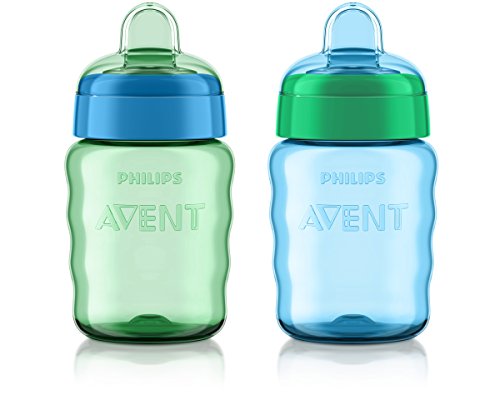
Philips Avent My Easy Sippy Cup, Soft Spout, 9 oz (2-Pack)
A cheap, simple spout cup if spills matter more than the AAP's no-valve advice; chosen from the listing, not tested.
Pros
- + Soft silicone spout, per Philips Avent
- + Rippled anti-slip texture for small hands
- + Few parts, all dishwasher safe; two cups; sold by Amazon.com
Cons
- - One-piece built-in valve, the kind the AAP suggests avoiding in a sippy cup

NUK Learner Cup, Soft Spout, 10 oz (2-Pack)
A spout cup with removable handles for older babies; chosen from the listing, not tested.
Pros
- + Soft spout NUK says is gentle on gums, with an air vent
- + Anti-slip handles come off as baby grows
- + BPA free and dishwasher safe; sold by Amazon.com
Cons
- - Listing gives two ages: 6+ months in the title, 9 months+ in the details

Nuby Clik-It Grip N' Sip Soft Spout Cup, 10 oz (3-Pack)
The budget multipack if you want spare spout cups for daycare; chosen from the listing, not tested.
Pros
- + Three cups for $7.99 list
- + Soft silicone spout with handles and a contoured base
- + Top-rack dishwasher safe; sold by Amazon.com
Cons
- - Valved (Touch-Flo) spout; listed from 4 months, earlier than the AAP's around 6 months
Still comparing? Search Amazon
Today's Deals →Quick searches, tagged so you support the site at no extra cost.
Amazon prices and availability change often; cards with a live Amazon price show when it was last checked. As an Amazon Associate I earn from qualifying purchases.


