Best Baby Carriers for Newborns (2026)
Eight carriers and wraps for newborns compared on carry positions, weight range and hip-health claims, with the IHDI's hip guidance and the CPSC carrier rules.
Independently chosen. As an Amazon Associate I earn from qualifying purchases: if you buy through our links, we may earn a commission at no cost to you. How we research
Quick answer
For one carrier from birth to toddler, get a structured carrier like the Ergobaby Omni Classic or BabyBjörn Harmony. For the newborn months only, a stretchy wrap like the Boba is softer and machine washable. The International Hip Dysplasia Institute favors carrying facing in, hips spread and thighs supported, for the first six months.
In this guide
- Every stage, with a newborn positionBabyBjörn Baby Carrier Harmony, 3D MeshFrom the listing · not tested
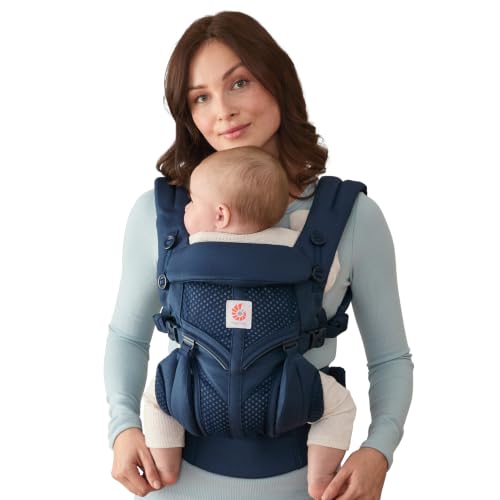


The first question with a carrier is how long you want it to last: the newborn months only, or years. Buckled carriers, stretchy wraps and a pre-wrapped carrier are compared below on positions, weight range and the hip-health claims on their listings.
How we chose: we compared eight carriers and wraps, each sold by Amazon.com or the brand's own store and in stock in September 2026, on the positions, weight range and hip-health claims their listings state; we did not test them.
The eight carriers side by side
| Carrier | Type | Weight range (listing) | Positions (listing) | IHDI claim on listing | Sold by | Amazon price |
|---|---|---|---|---|---|---|
| Ergobaby Omni Classic | Structured | Newborn to 48 months | 4: in, out, back, hip | Yes | Amazon.com | $179.00 (Amazon, as of Nov 12, 2026, 11:01 PM UTC)Check price |
| BabyBjörn Harmony 3D Mesh | Structured | Not stated | 4: newborn, in, out, back | Yes | Amazon.com | $195.66 (Amazon, as of Nov 12, 2026, 11:02 PM UTC)Check price |
| Tula Free-to-Grow Mesh | Structured | 7-45 lbs | 2: front in, back | No (says "ergonomic positioning") | Tula | $179.00 (Amazon, as of Nov 12, 2026, 11:02 PM UTC)Check price |
| LÍLLÉbaby Complete Airflow Deluxe | Structured | 7-45 lbs | 6-in-1, in and out | Not stated | LÍLLÉbaby | $83.99 (Amazon, as of Nov 12, 2026, 11:02 PM UTC)Check price |
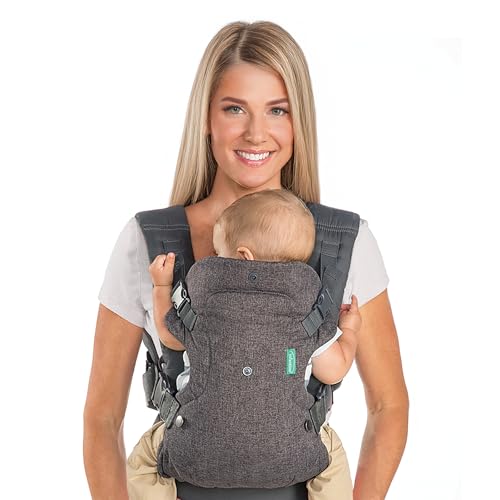
| Infantino Flip 4-in-1 | Structured | 8-32 lbs | 4: in (narrow/wide), out, back | No | Amazon.com | $29.15 (Amazon, as of Nov 12, 2026, 11:01 PM UTC)Check price |
| Boba Wrap | Stretchy wrap | 7-35 lbs | Not stated | Yes | Boba | $39.99 (Amazon, as of Nov 12, 2026, 11:01 PM UTC)Check price |
| Solly Baby Wrap | Stretchy wrap | 8-25 lbs | Not stated | Yes | Solly Baby | $74.00 (Amazon, as of Nov 12, 2026, 11:02 PM UTC)Check price |
| Baby K'tan Original | Pre-wrapped | Newborn to 35 lbs | 5 | No (says "hip-healthy seated position") | Baby K'tan | $64.95 (Amazon, as of Nov 12, 2026, 11:01 PM UTC)Check price |
Prices are Amazon's, as of the time shown, and subject to change. Details

What the IHDI means by hip-healthy
The International Hip Dysplasia Institute (IHDI) describes the M-position as "a natural clinging position for infants", also called the spread-squat or jockey position. In a carrier that looks like this:
- The baby's thighs spread around the wearer's torso.
- The hips are bent so the knees sit slightly higher than the bottom.
- The thighs are supported to the knees, not dangling from a narrow seat.
Key point: the IHDI says "inward-facing carrying may be healthier for hip development, especially during the first six months," and that while outward-facing "may not be harmful, the inward-facing position is acknowledged as hip healthy."
The listings for Ergobaby, BabyBjörn, Boba and Solly also say the IHDI has recognized those products. Treat that as the maker's claim: the IHDI's babywearing page does not list products. On a carrier with an adjustable seat, such as the Infantino Flip, use the wide setting, since that is the one that supports the thighs to the knees.
Buckles or fabric
Structured carriers (Ergobaby, BabyBjörn, Tula, LÍLLÉbaby, Infantino) have buckles, padded straps and a waist belt. They go on quickly, two caregivers can share one, and most run from newborn to toddler. For long trails with an older baby, a framed pack is its own category; our hiking backpack carriers guide compares five.
- The Ergobaby Omni Classic lists four positions and lumbar support from newborn to 48 months.
- The Tula Free-to-Grow lists 7-45 lbs but only front inward-facing and back carry. That is enough if you never plan to face your baby out.
- The Infantino Flip has four carry options, including a narrow or wide inward seat, and tops out lower, at 32 lbs.

Wraps (Boba, Solly) are long lengths of stretchy fabric you tie around yourself. They are snug for a newborn, but tying takes practice and they top out lower: 35 lbs for the Boba, 25 lbs for the Solly. Our slings and wraps guide adds ring slings and a woven wrap.
Pre-wrapped carriers like the Baby K'tan sit in between: fabric loops you slip on without tying. The downside is that it is sized to the wearer, not the baby, so each caregiver may need their own.
Carrying a newborn safely
Soft carriers sold in the US must meet the CPSC's soft infant and toddler carrier rule (16 CFR part 1226, based on ASTM F2236); slings must meet the CPSC's sling carrier rule (16 CFR part 1228, based on ASTM F2907).
- Use the manual's newborn setup. Several carriers need an insert or a specific newborn setting; the minimum weights above are the makers'.
- Move a sleeping baby. The AAP's safe sleep guide says that if your baby falls asleep in an infant carrier or sling, "you should move them to a firm sleep surface on their back as soon as possible." Our safe sleep guide covers the rest.
- Check recalls before buying secondhand, in our baby product recall checker.
Which one to buy
- One carrier for every stage: the Ergobaby Omni Classic or BabyBjörn Harmony, both with four positions and an IHDI claim on the listing.
- Only ever facing in: the Tula Free-to-Grow, 7-45 lbs.
- Six carry options: the LÍLLÉbaby Complete Airflow Deluxe, 7-45 lbs with lumbar support.
- Babies up to 32 lbs: the Infantino Flip, on the wide seat.
- Newborn wrap: the Boba; for a lighter, cooler fabric, the Solly.
- No tying: the Baby K'tan, if you get the wearer's size right.
A carrier can also wait until after the birth; see our budget registry checklist.
The products in this guide
In the order this guide discusses them, from listings and published standards. Where a price appears it is Amazon's, with the time it was read.
Every stage, including a hip carry
Ergobaby Omni Classic Baby Carrier
From the listing · not testedBuy it for one carrier from newborn to 48 months, with a hip carry.
Pros
- + Four positions: inward-facing, outward-facing, back and hip carry, per Ergobaby
- + Adjustable back panel and bucket seat from newborn to 48 months
- + Lumbar support for the wearer; the listing says the IHDI has determined all Ergobaby carriers are hip-healthy
Cons
- - No weight range stated on the listing; check Ergobaby's manual
Every stage, with a newborn position
BabyBjörn Baby Carrier Harmony, 3D Mesh
From the listing · not testedBuy it for breathable mesh and a dedicated newborn position.
Pros
- + Four positions: newborn, facing in, facing out and on your back
- + 3D mesh for airflow, padded shoulder straps and a pressure-relieving waist belt
- + The listing says the IHDI acknowledges Harmony as a hip-healthy product
Cons
- - No weight range stated on the listing; check BabyBjörn's manual
Only ever facing in
Tula Original Mesh Baby Carrier, Free-to-Grow
From the listing · not testedBuy it if you will only carry facing in or on your back.
Pros
- + Newborn ready, 0-48 months and 7-45 lbs, per Tula
- + Breathable, machine-washable mesh; removable hood and phone pocket
- + Padded shoulder straps and a wide waistband
Cons
- - Two positions only: front inward-facing and back carry

Six carry options
LÍLLÉbaby Complete Airflow Deluxe 6-in-1 Baby Carrier
From the listing · not testedBuy it for six carry options and lumbar support, from 7 to 45 lbs.
Pros
- + 6-in-1 carrier for 7-45 lbs, infant to toddler, per its listing title
- + Lumbar support and inward or outward facing
- + Six carry options, the most of any carrier here
Cons
- - The listing gives few details beyond its title
Babies up to 32 lbs
Infantino Flip 4-in-1 Baby Carrier
From the listing · not testedBuy it for four positions up to 32 lbs; use the wide seat.
Pros
- + Supports babies from 8-32 lbs, per Infantino
- + Facing-in with a narrow or wide seat, facing-out, or back carry
- + Padded shoulder straps and a supportive waist belt
Cons
- - Lighter padding, and a lower top weight (32 lbs) than the 45 lb carriers here

A stretchy newborn wrap
Boba Baby Wrap Carrier, Stretch Cotton
From the listing · not testedBuy it for a snug newborn wrap you can machine wash and tumble dry.
Pros
- + Holds babies from 7-35 lbs, per Boba
- + The listing says it is certified hip-healthy by the IHDI
- + 95% cotton, 5% spandex; machine washable and dryer safe
Cons
- - A long wrap takes practice to tie

A lighter, cooler newborn wrap
Solly Baby Wrap
From the listing · not testedBuy it for a lighter, cooler wrap, knowing it tops out at 25 lbs.
Pros
- + Lightweight TENCEL Modal fabric, for 8-25 lbs
- + One size for wearers of all sizes
- + The listing says the IHDI recognizes Solly wraps for healthy hip development
Cons
- - Lowest top weight here: 25 lbs

No tying
Baby K'tan Original Pre-Wrapped Carrier
From the listing · not testedBuy it to skip tying, if you can get each wearer's size right.
Pros
- + Slips on like a T-shirt: no rings, buckles or tying
- + Five carry positions, from newborn up to 35 lbs
- + 100% cotton, double-loop design
Cons
- - Sized to the wearer, so each caregiver may need their own size
Frequently Asked Questions
Is it OK for a baby to face out in a carrier?
The IHDI says outward-facing "may not be harmful", but that inward-facing carrying may be healthier for hip development, especially in the first six months. If your carrier allows facing out, the IHDI's guidance points to saving it for later.
Is a wrap or a structured carrier better?
It depends how long you want to use it: a wrap is soft and snug for newborns but takes practice and tops out at 25-35 lbs here, while a structured carrier buckles on quickly, shares easily between caregivers and usually lasts to toddlerhood.
How long do hip position rules matter?
Most of all in the first six months. The IHDI's babywearing page says "the hips are still developing rapidly until age six months, and more slowly during the next six months."
Should I send in a carrier's registration card?
Yes. The CPSC's carrier rule page says registration forms are required for durable infant products so the maker or retailer can contact you with recall or other safety information.
Proof
Sources
Everything this guide relies on, as linked in the text. Last checked September 28, 2026.
- International Hip Dysplasia Institute: Baby wearing
- U.S. Consumer Product Safety Commission: CPSC's soft infant and toddler carrier rule
- U.S. Consumer Product Safety Commission: CPSC's sling carrier rule
- American Academy of Pediatrics: AAP's safe sleep guide
NurseryProof is a participant in the Amazon Services LLC Associates Program, an affiliate advertising program designed to provide a means for sites to earn advertising fees by advertising and linking to Amazon.com. This guide summarizes public guidance and is not medical advice; ask your pediatrician about your baby's hips.
Amazon prices and availability change often; cards with a live Amazon price show when it was last checked. As an Amazon Associate I earn from qualifying purchases.


